Assessment
The Feedback Economy: Why Every Industry Has It Except Education
Across mobility, digital media, and business, continuous feedback loops drive optimization. Why education remains largely static and episodic, and how diagnostic evaluation closes the loop.
Jahnavi1 min read
Read on Substack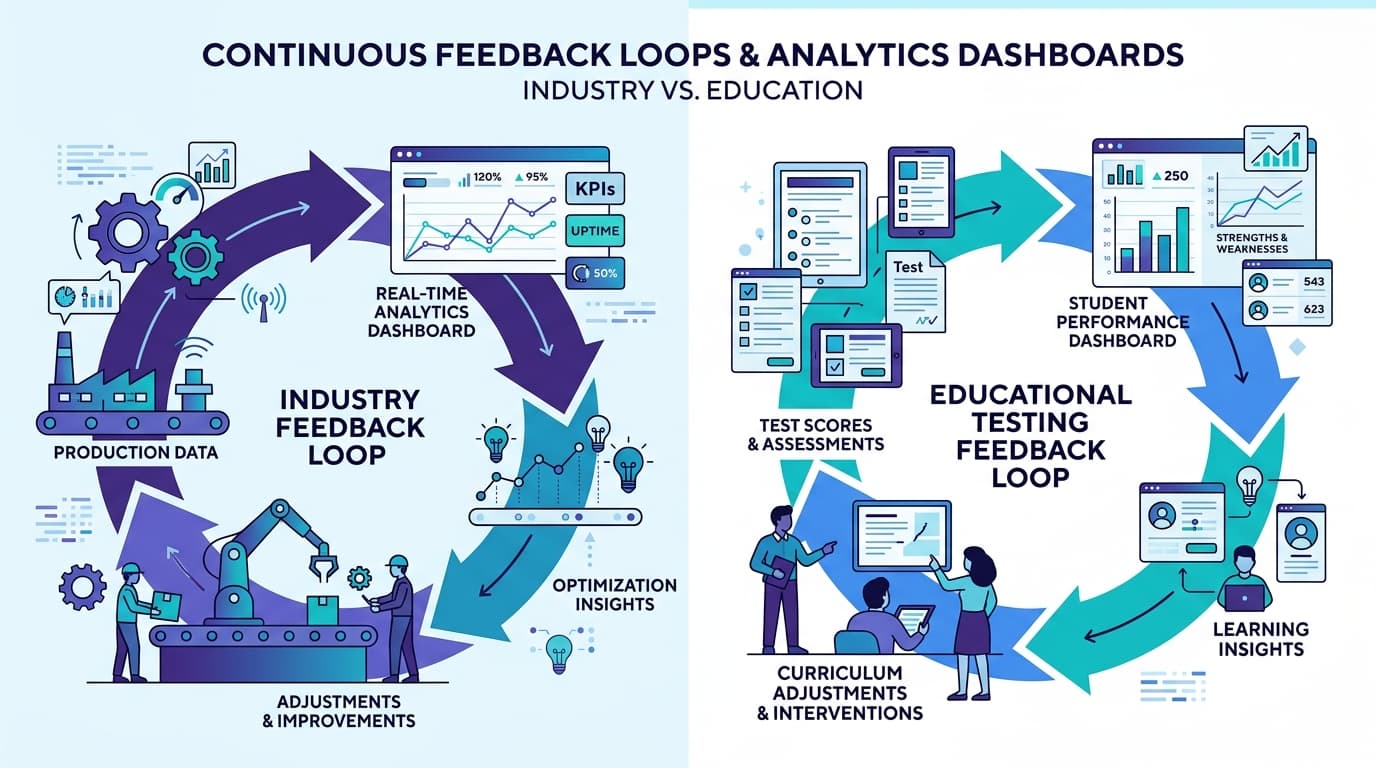
In modern systems, improvement is rarely left to assumption. From ride-sharing algorithms and digital creators to athletic performance analytics, progress is powered by continuous, real-time feedback loops. Education, however, remains a notable exception.
The Absence of Continuous Feedback in Schooling
Educational evaluation remains largely episodic. Students spend months preparing, only to be evaluated at fixed intervals through an examination that reduces all learning into a single numerical score. It rarely explains why a student struggled or how they can improve.
Research Evidence: Feedback Quality Determines Outcomes
In his synthesis of over 800 meta-analyses on student achievement, educational researcher John Hattie found that timely, specific, and actionable feedback ranks among the most impactful influences on learning outcomes.
- What was done correctly?
- Where did errors occur?
- What to do differently next?
BlankSage structures evaluation around explanation, pattern recognition, and actionable diagnosis, closing the feedback loop so assessment becomes a dynamic driver of continuous learning.
Related articles
Assessment
Why School Makes Students Fear Mistakes
Standardization rewards correct answers over curiosity. How the fear of mistakes triggers the amygdala, shuts down working memory, and why timely feedback turns errors into stepping stones.
Assessment
Why Marks Alone Are a Terrible Measure of Progress
Schools collect millions of marks every year, yet cannot answer why a student got that score. Marks as a lagging indicator vs. extracting diagnostic learning data from answer scripts.