Assessment
Why School Makes Students Fear Mistakes
Standardization rewards correct answers over curiosity. How the fear of mistakes triggers the amygdala, shuts down working memory, and why timely feedback turns errors into stepping stones.
Jahnavi1 min read
Read on Substack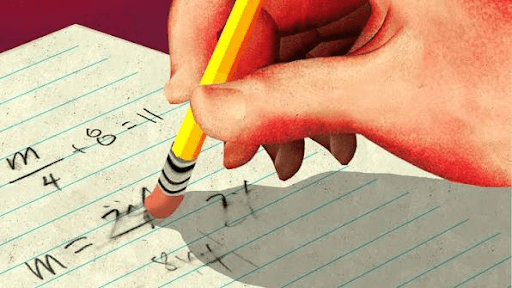
So many students are afraid of approaching exam dates. Burnout and pressure around exams only make things worse. Human beings are wired to learn through trial and error: we learn to walk by falling, to speak by mispronouncing words, and to solve problems by getting them wrong first. Yet school often teaches the opposite.
The Neuroscience of Fear in Learning
When we are afraid, our brains shift into survival mode, taking resources away from logical thinking, working memory, and problem-solving:
- The amygdala takes over: Danger detection overrides the prefrontal cortex responsible for reasoning and concentration.
- Stress hormones disrupt memory: Elevated cortisol interferes with the hippocampus, making it harder to retrieve knowledge during tests.
- Safety over understanding: Students prioritize safe, memorized answers over genuine inquiry and deep conceptual understanding.
Why the System Created This Fear
Modern schooling was built around an industrial model where standardisation comes first. Grades became the easiest way to quantify and sort millions of students. In a system built around uniformity, mistakes become deductions rather than exploration opportunities.
Learning was never meant to be about proving your intelligence. It was meant to expand it.
Rising Above the Fear
Treat mistakes like data. When you understand why an answer was marked down and how to improve it, mistakes stop feeling like failures and start becoming stepping stones. Timely, granular feedback transforms evaluation into a tool for growth.
Related articles
Assessment
The Feedback Economy: Why Every Industry Has It Except Education
Across mobility, digital media, and business, continuous feedback loops drive optimization. Why education remains largely static and episodic, and how diagnostic evaluation closes the loop.
Assessment
Why Marks Alone Are a Terrible Measure of Progress
Schools collect millions of marks every year, yet cannot answer why a student got that score. Marks as a lagging indicator vs. extracting diagnostic learning data from answer scripts.