
Learning
The Forgetting Curve and How You Can Beat It
Every time you study, information fades. Hermann Ebbinghaus's forgetting curve model, active vs passive recall, and a 4-stage spaced revision schedule that works.
Jahnavi1 min read
Read on Substack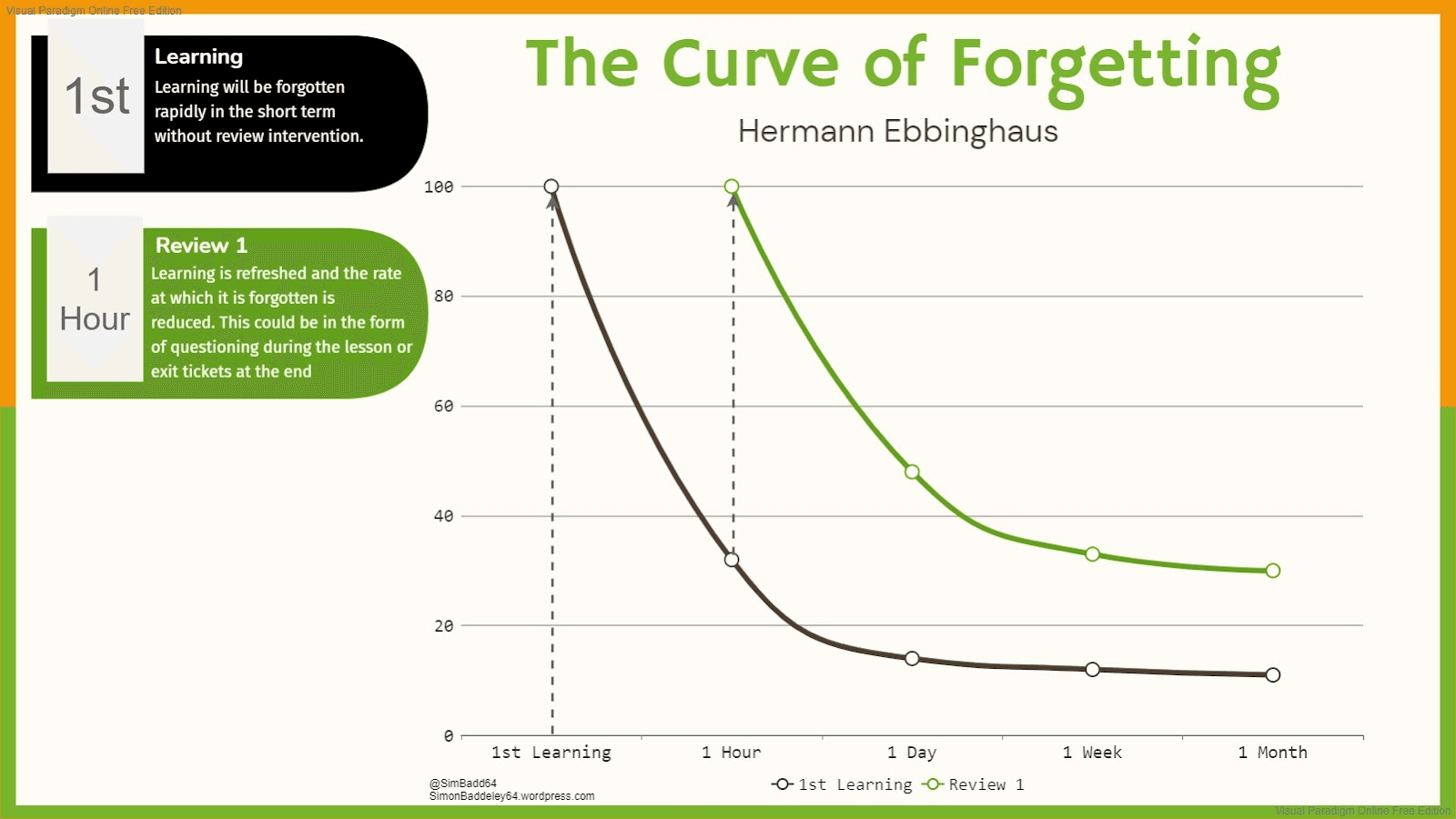
Every time you sit down to study, there is resistance. How much is actually going to get done today? And even if you spend three hours covering multiple topics, there's no guarantee you'll remember any of it by the end of the week.
Passive vs. Active Learning
Passive learning—reading, listening, or highlighting—is useful when you are first introduced to new concepts. But to make knowledge stick, you need active learning: writing, discussion, solving practice questions, and retrieving information from memory without looking at notes.
What Is the Forgetting Curve?
Discovered by German psychologist Hermann Ebbinghaus in 1885, the forgetting curve is a psychological model illustrating that without active review, humans lose over 50% of newly learned information within days. Forgetting is not linear; it is a predictable decay that can be reversed through spaced repetition.
- 1 Hour Later
- 1 Day Later
- 1 Week Later
- 1 Month Later
Targeted Revision with BlankSage
Solving sample papers with active recall forces the brain to reconstruct understanding. BlankSage pinpoints your conceptual gaps and weak points so revision is targeted and efficient, rather than relearning everything from scratch under pressure.
Related articles
Learning
The Psychology Behind Last-Minute Studying
Almost every student has crammed for an exam at the very last minute. Understanding the dopamine rush, emotional avoidance, the Zeigarnik effect, and how to break the panic cycle.
Learning
Why Curiosity Is Education’s Most Important Tool
The neuroscience of curiosity: how dopamine and hippocampal activation accelerate learning, why questioning beats memorizing, and how to practice curiosity for lifelong growth.