AI in Education
Why Personalized Learning Needs Personalized Evaluation
A student spends months learning with adaptive content, only to be reduced to a single test score. Why personalized evaluation is the missing half of modern education.
Jahnavi1 min read
Read on Substack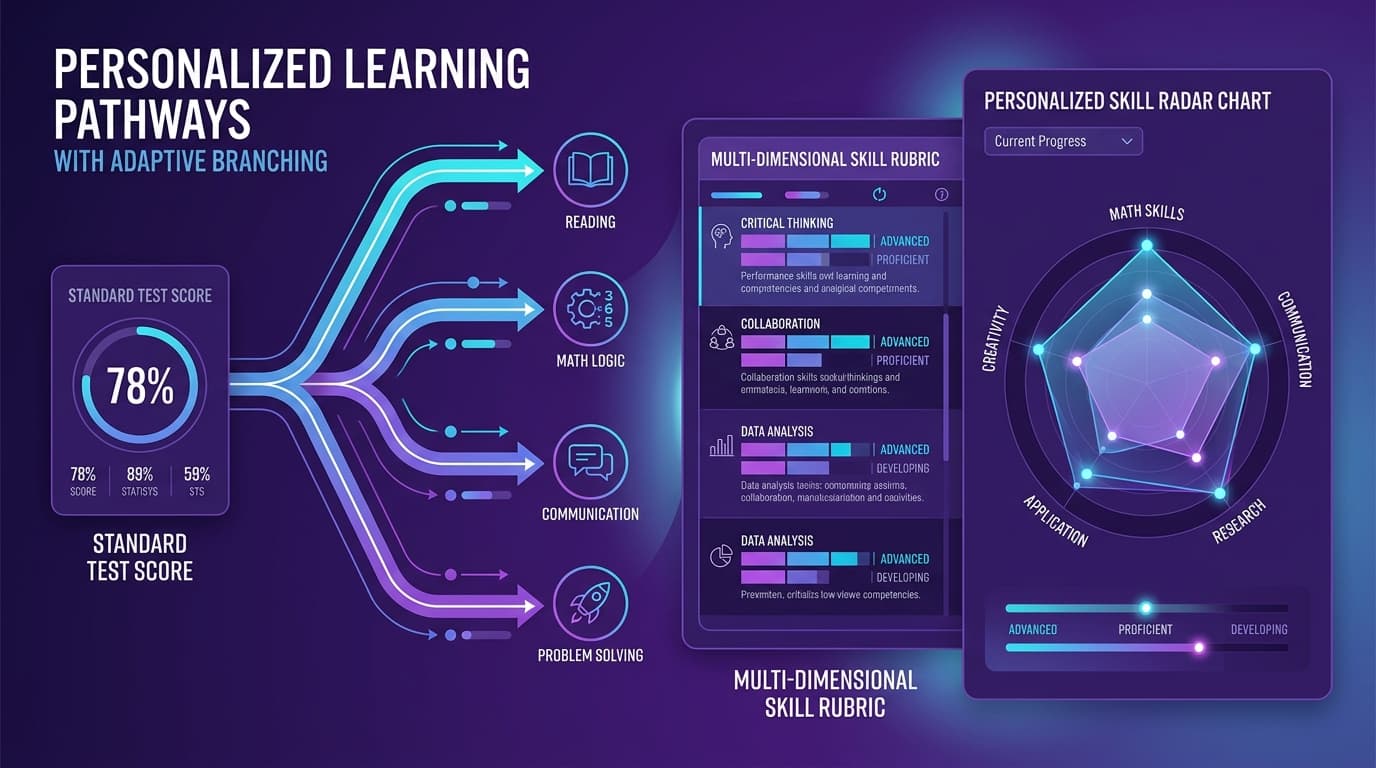
A student spends months learning through adaptive practice tests, AI tutors, and customized study plans. Every lesson is tailored to their pace and strengths. Then comes the examination, and all that individuality is reduced to a single number.
The Missing Half of Personalization
Personalized learning has gained widespread adoption because no two students learn identically. Yet while learning has become adaptive, evaluation has remained largely standardized and static.
Consider two students who receive the exact same score of 72% on an exam. One understands the core concepts but struggled with time management and calculation steps. The other memorized formulas without grasping the principles. Their scores are identical, but their learning needs are completely different.
Beyond Grades: Diagnostic Evaluation
Instead of asking 'How well did this student perform?', educators should ask 'What does this performance reveal about how this student learns?' BlankSage bridges this gap by uncovering the story behind every score through rubric-grounded AI evaluation.
Related articles
AI in Education
AI should assist the evaluator, not replace them
Automated evaluation is most useful when a teacher can see its reasoning, correct it, and stay responsible for the final mark.
Student Strategy
Why Motivation Keeps Failing You
The idea of motivation is deeply enticing because it promises an effortless bridge between our current reality and our highest ambitions. Why systems and discipline always win.