
Student Strategy
Why Motivation Keeps Failing You
The idea of motivation is deeply enticing because it promises an effortless bridge between our current reality and our highest ambitions. Why systems and discipline always win.
Jahnavi2 min read
Read on Substack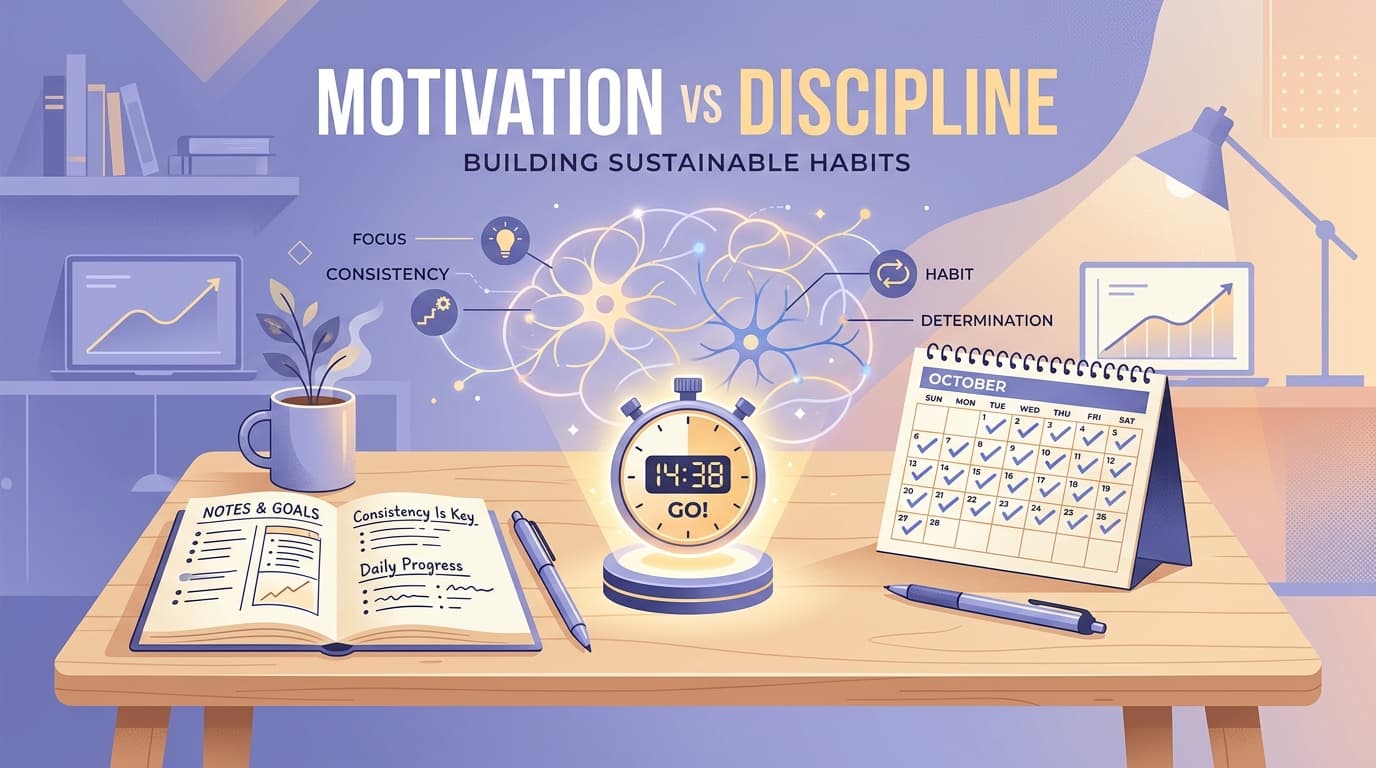
When you hear the word motivation, something happens before you've even decided to do anything. A strange fizz of energy runs through your body. Suddenly, you become aware of the endless potential you contain, something that's been waiting to explode and change your life forever. But motivation does not really work that way.
The idea of motivation is deeply enticing because it promises an effortless bridge between our current reality and our highest ambitions. It convinces us that all we need is one powerful burst of energy to replace procrastination with productivity, hesitation with action. Students, in particular, binge productivity videos the night before a new semester, reorganise desks, buy fresh notebooks, and convince themselves this time will be different. But that's what motivation does—it makes change feel immediate, even when nothing has actually changed.
A Deeper Understanding of Motivation
Motivation is the psychological driving force that initiates, guides, and maintains your goal-oriented behaviors. It is divided into two primary types:
- Intrinsic Motivation: Stems purely from within. You do something because you find it inherently enjoyable, satisfying, or aligned with your personal identity.
- Extrinsic Motivation: Driven by external factors or rewards, such as recognition, grades, or avoiding negative outcomes.
Intrinsic motivation will take you further than extrinsic because it isn't dependent on outside rewards. But even then, motivation, no matter where it comes from, isn't enough to consistently keep you on track towards your goals.
Why Inspiration Runs Out
Motivation is temporary. It is an emotion-driven state tied to changing moods, external rewards, or short-term stimuli that fade once a goal is met or excitement wears off.
- The Brain's Survival Mechanism: Your brain is wired to save energy and prioritize immediate gratification (temporal discounting) over delayed long-term rewards.
- Emotional Burnout: Initial bursts of inspiration are fueled by intense emotions that naturally subside.
- Delayed Progress: When you don't see immediate visible results, motivation quickly drops because the end goal feels too far out of reach.
Motivation is just the spark that gets you started, but discipline is the fuel that keeps you going.
The Power of Discipline and Systems
The most consistent and successful people don't rely on motivation; they rely on systems. Forcing yourself to take action, no matter how small, creates its own momentum rather than waiting for inspiration to strike first.
Routine, accountability, and discipline are what help through thick and thin. Discipline can never be romanticised as easily as motivation can, but it is what will carry you through your weakest moments, ordinary days, and the times when motivation has long since disappeared.
Related articles
Student Strategy
The Problem With Calling Yourself "Average"
How labels become identities. The neuroplasticity of self-talk, confirmation bias in testing, and why past performance is never a final verdict on your intelligence.
Learning
The Psychology Behind Last-Minute Studying
Almost every student has crammed for an exam at the very last minute. Understanding the dopamine rush, emotional avoidance, the Zeigarnik effect, and how to break the panic cycle.