
Learning
The Science of Active Recall: Why High-Performing Students Test Themselves More
The cognitive psychology behind the testing effect, self-testing strategies of high-performing students, and pairing active recall with rapid, actionable feedback.
Jahnavi1 min read
Read on Substack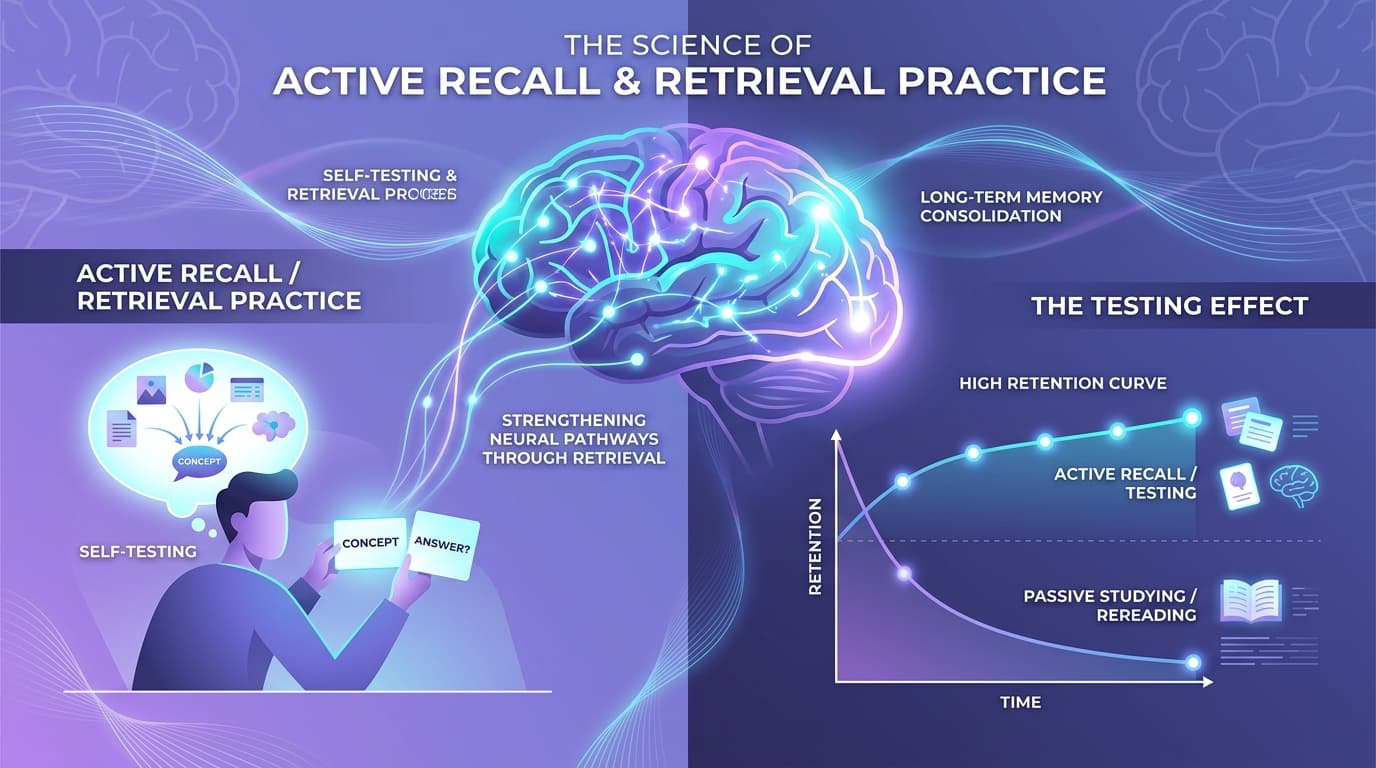
When top students explain their study routines, they consistently emphasize practice. But what matters most is how they practice: alternating between learning and testing to ensure knowledge sticks.
What Is the Testing Effect?
Research by cognitive psychologists Henry Roediger and Jeffrey Karpicke demonstrates that deliberate retrieval of information from memory strengthens neural pathways far more effectively than repeated rereading or highlighting.
- Identifies knowledge gaps before high-stakes exams.
- Strengthens long-term retention through retrieval effort.
- Simulates exam conditions to reduce test anxiety.
- Maximizes the value of study time by highlighting areas needing review.
Pairing Active Recall with Immediate Feedback
Testing alone is insufficient if learners don't understand why an answer was marked down. BlankSage delivers instant, step-by-step diagnostic feedback so every practice test becomes an active learning cycle.
Related articles
Learning
The Psychology Behind Last-Minute Studying
Almost every student has crammed for an exam at the very last minute. Understanding the dopamine rush, emotional avoidance, the Zeigarnik effect, and how to break the panic cycle.
Learning
The Forgetting Curve and How You Can Beat It
Every time you study, information fades. Hermann Ebbinghaus's forgetting curve model, active vs passive recall, and a 4-stage spaced revision schedule that works.